
The National Disaster Response Force (NDRF) is closely monitoring the India-Nepal border regions in Bihar and Uttar Pradesh for any adverse impact from the devastating flash floods in Nepal. While no significant impact has been reported yet, 20 NDRF teams are deployed in the Indian states for potential relief operations. India has also sent humanitarian aid to Nepal and has additional NDRF teams on standby for deployment if requested.

Three unidentified bodies, believed to have drifted from Nepal due to devastating floods, were recovered from the Gandak river in Uttar Pradesh's Kushinagar district. This incident follows a similar recovery of four bodies in neighbouring Maharajganj, highlighting the cross-border impact of the Nepal floods which began on August 26. Authorities are coordinating with Nepal to identify the deceased and are monitoring the river situation.

Villages along the Uttar Pradesh-Bihar border are on high alert following devastating flash floods in Nepal, with authorities monitoring the Gandak River for potential downstream surges and the NDRF deploying 20 teams for preparedness.

Bihar and Uttar Pradesh are on high alert following devastating flash floods in Nepal's Gandak river system, prompting emergency measures including evacuations and continuous monitoring by central and state authorities.

State officials report that at least 114 tourists from Maharashtra are estimated to be stranded in flood-hit Nepal, with 53 confirmed safe. The Maharashtra government has initiated coordination efforts with tour agencies and central authorities, establishing helplines and control rooms to assist and gather information on those affected by the devastating flash floods.

Indian tourists are abandoning their trips to Nepal and returning via the Sonauli border due to severe flooding, which has disrupted road connectivity and raised safety concerns. The floods have caused a high death toll and left nearly 1,000 people missing, including many foreign nationals, significantly impacting Nepal's tourism sector.

Nepal's devastating flash floods have created a worrisome flood situation in Bihar.

A massive flash flood originating in Tibet has devastated central Nepal, killing 17 people and leaving nearly 500 missing, including 105 Indians. The deluge, caused by a rock slide near the Nepal-Tibet border, swept through districts, washing away bridges and severely damaging at least a dozen hydropower projects.

The southwest monsoon has advanced across northern Indian states, leading to widespread rainfall, waterlogging, road blockages, and rain-related deaths, particularly in Himachal Pradesh and Rajasthan. The Centre is monitoring the situation, especially concerning potential drought conditions in some areas due to the El Nino effect.

Above-normal cold wave days are expected in some areas of central India, eastern Uttar Pradesh and Bihar during January 2026.
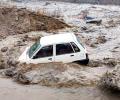
The India Meteorological Department (IMD) forecasts above-normal rainfall for India in September, following a monsoon season marked by heavy downpours and related disasters in various regions. The forecast indicates normal to above-normal rainfall for most areas, with some exceptions in the northeast, east, extreme south peninsular India, and parts of northwest India.

Despite high exposure to floods, Assam, Bihar, Uttar Pradesh, Odisha, and Sikkim are the best performing states in terms of flood early warning systems (EWS), according to the report by independent policy research think tank The Council on Energy Environment and Water.
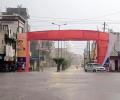
Heavy rainfall across North India leads to fatalities, structural damage, travel disruptions, and school closures. Eastern states brace for more rain.

Rising Yamuna River levels flood low-lying areas of Delhi, displacing residents and disrupting businesses. Families struggle with loss of homes and livelihoods.

IMD data shows in the 24 hours between September 1 and 2, Haryana received 806 per cent more rainfall than normal, Punjab 759 per cent, Himachal Pradesh 510 per cent, Delhi 740 per cent, Chandigarh a staggering 1,638 per cent, and Rajasthan 193 per cent.
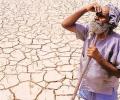
The death toll included over 450 from intense heat wave last summer, according to the World Meteorological Organization.

The India Meteorological Department (IMD) has predicted above-normal rainfall for the upcoming monsoon season in India (June to September). The cumulative rainfall is estimated to be 105 percent of the long-period average. The IMD has also ruled out the possibility of El Nino conditions during the entire season. The monsoon is crucial for India's agriculture sector, which supports the livelihood of a significant portion of the population and contributes substantially to the country's GDP. However, while the prediction of normal rainfall brings relief, climate change is expected to cause variations in rainfall distribution.

Heavy rain in the first week of July compensated for the shortfall but caused flooding in many northeastern states.
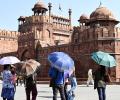
'The intensity and frequency of heatwaves will be much higher than in previous years over Punjab, Haryana, Rajasthan, Gujarat, Madhya Pradesh and Odisha.'

Shah pulled no punches in lambasting the RJD supremo for alleged nepotism, accusing him of making his wife the chief minister, getting his daughter elected to Parliament and "now both his sons want to become the CM".
Several global models are predicting El Nio to appear around the second half of the year, which are the crucial rain-bearing months.
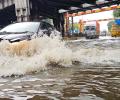
The monsoon spelt mayhem in several parts of the country on Monday, particularly Mumbai where local train services and flight operations were hit and everyday life disrupted as well as Assam that was grappling with floods yet again.

Unprecedented rains and floods in the northern region in the past few days have not only caused extensive damage to lives and property but have also impacted business and commercial establishments. Vegetable prices have gone through the roof in the national capital and many other parts of the country since rains started pouring earlier this month. Traders say vegetable prices would come down only after roads open and skies clear, even as water in the fields will take time to recede.

The India meteorological department has stated that day temperatures are likely to be above normal by 0.5 degree Celsius, reports Sanjeeb Mukherjee.

'Besides Ayodhya, the BJP lost in nine other constituencies with a Ramayana imprint; it tasted success only in Thrissur.' 'In Rameswaram, K Navaskani of the Indian Union Muslim League won with a 44% voteshare in a 84% Hindu constituency.' 'In the 21 seats in the Ayodhya and Varanasi regions, both crucial to the Hindutva project, the BJP won just 7.' 'It won just 3 out of 12 seats around Modi's constituency,' points out Krishna Prasad.

'The Weather Channel argues that India faces the gravest challenge: Climate change-induced health vulnerability.' 'This is an issue often neglected, alerts Claude Arpi: "Prolonged summers, unpredictable rains, floods, droughts, and rising sea levels are the harsh realities of climate change in the country. These factors increase the frequency and severity of illnesses, pushing people into poverty, and forcing migration".'

Temperatures in March will be critical to determining the impact of any unusual heatwave conditions on this year's wheat crop in North India. It is that time of the year when the crop enters its vital grain-filling stage, say meteorologists and crop experts. So far, the high day temperatures in the North are not believed to have any significant impact on the final yields since the crop hasn't entered a stage where heat affects yields.

District election officer Mahendra Bahadur Singh said Aman Giri won by a margin of 34,298 votes. He received 1,24,810 votes while Tiwari got 90,512 votes.

When it comes to the Congress and Wayanad, the only way the scepticism in the minds of some in Kerala may be addressed is by the Gandhi family proving that they are more than a passing caravan in town, reports Shyam G Menon.

Villages are flooded, roads have washed away and railway tracks have submerged under the rising waters.

This is the first cyclone in the Bay of Bengal this pre-monsoon season.

Between June 1 and July 28, about 32 per cent of the 685 districts in the country did not receive adequate rainfall.

The Green Panel also questioned the building up of pontoon bridge by the army on river Yamuna for the festival, and asked the Delhi Development Authority counsel as who gave the permission for setting it up.
However, the estimates could change in the coming months, as full impact of excess rainfall and floods on the standing soybean and urad crops in central and western India in late August and September has not yet been fully taken into account.

In the coming months, globally as well as in India, rice might remain a hot potato.

Bandhan Bank has declared disappointing results for the first quarter of the 2023-24 financial year (Q1FY24). While the market has been braced for known issues around microfinance exposures in West Bengal and Assam, there is higher stress in the portfolio. This means higher credit costs and poorer asset quality, leading to target downgrades by analysts.

The Uttar Pradesh government on Wednesday reluctantly admitted before the National Green Tribunal that illegal sand mining was going on in the state and not even a single environmental clearance had been granted for it in Gautam Budh Nagar district.

Maharashtra, the country's largest cane and sugar producer after Uttar Pradesh, had, over the past few years, weathered adverse market dynamics brought about by a domestic and global sugar glut, mounting arrears and muted exports.

'The wife will not only abuse her husband for giving her less money, but also abuse the government.' 'Look at the price of a cooking gas cylinder, it is Rs 1,200.'

India received 41 per cent more rainfall than normal from October 1-21 with Uttarakhand alone recording more than five times its normal precipitation, IMD data showed on Thursday.
